| xx |
| xx |
| cc |
| www.fretnotgospel.com/iran.html |
| cc |
References - Books Iran, Enchantment of the World, Miriam Greenblatt, Childrens Press, 2003, p.145 Internet IRNA Press Release www:irna.com/en/news/view/line-24/0612120166200323.htm IRNA Press Release www.irna.com/en/news/view/line-24/0612138553093744.htm IRNA Press Release www.irna.com/en/news/view/line-24/0612140406171021.htm IRNA Press Release www.irna.com/en/news/view/line-24/0611158750175759.htm Why Iran Matters Chuck Colson, 12/05/2006 Preparing for the Madhi Chuck Colson, 08/14/2006 Iran Threat Like Nazis: Netanyahu Abraham Rabinovich, Jerusalem, 12/02/2006 Dissent New Terror Fatwa Jahanshah Rashidian, Iran Press Service, 12/08/2006 |
| by Noah Arthur |
| by Noah Arthur |
| by Noah Arthur |
| by Noah Arthur |
| by Noah Arthur |
| 2ND IMPORTANT THING ABOUT IRAN Iranians are 89% Shiite Muslim. Iran's main religion is Islam. Its believers are called Muslims. Islam started when Muhammed, a rich merchant, thought he saw an angel. It told him saying to memorize: The saying said that there is one God and also said a few other things. Muhammed became the first Muslim. He began converting people who believed in many gods to Islam. The people of the city of Mecca were worried that the new religion would ruin the city's economy. Meccans began attacking Muhammed's followers, but finally Muhammed and his followers took over Mecca. More people were converted to Islam. In Iran, the main branch of Islam is the Shiite branch. The other main branch is the Sunni. Islam forces very strict, hard-to-obey laws on its believers. The laws include not being allowed to party, dance, drink any alcohol, go to bars, and women aren't allowed to go out without a male relative. Women also have to wear the chador whenever they go out. It is a black cloth that covers every part of a woman except her face. The Sunni and Shiite branches split apart from each other soon after Muhammed died. They split because the Shia believed that the line of the family of Muhammed should continue as Islamic leaders, even though the family line ended. The first leader after Muhammed in his own family was Ali, his cousin. The last in his family, also called the Twelfth Iman, or the Mahdi, disappeared at age four. But Mahdite Shiites believe that he was hidden by Allah and that he will return when the world ends. Overall, most Muslims are Sunnis. In Shiite Islam, there are five pillars of faith, five Shiites are required to do. They include praying in Arabic three times a day on all days except Saturdays, making a pilgrimage to Mecca once a lifetime, fasting during the daylight hours of the month of Ramadan, and giving one-fortieth of each person's money to the poor. The Qu'ran (Koran) is the Muslim religious book. The highest religious rank in Shiite Islam is "ayatollah". An ayatollah has studied in religious college for years, and has written books. The next rank down is the "hojatolislam". This word means "proof of Islam". The lowest rank of Shiite priests is the "mullah". All Shiite priests are call "mujtahids" as a group. The month of Ramadan is considered sacred by Muslims. In all the daylight hours of Ramadan, healthy non-pregnant people aren't allowed to eat or drink. There is a celebration at the end of Ramadan called Eid al-Fitr. They fast during Ramadah to earn Allah's acceptance. In Christianity, there is no such thing as earning God's acceptance.. |
| The Islamic Republic of Iran |
 |
| FIRST IMPORTANT THING ABOUT IRAN Iran threatens the destruction of Israel. Today, Islam still causes some problems in Iran. For example, a writer wrote something against Islam, and he probably will be killed if he is found. The writing that was against Islam has caused much anger among Iranian Muslims. Iran's current president, Mahmoud Ahmadinejad, he is what is called a Mahdite Muslim. He and other Madhites believe that a historical religious leader, or Imam, called the Mahdi, didn't die but was taken away by Allah, the Muslim God. Mahdites also believe that in a time of great disaster, the Mahdi will return and bring peace. Ahmadinejad and his country are an obvious threat to Israel. It also seems that Iran wants nuclear weapons, so Israel is in even more danger. Ahmadinejad has said that he wants Israel to no longer be a country. Europe apparently doesn't care much about the danger that Iran is to Israel. Ahmadinejad believe that Allah wants him to ruin Israel. Ahmadinejad's belief in the Mahdi makes him want to make all possible preparations for the Mahdi's return. It is possible that he even believes that making more trouble in the world would make the Mahdi come back faster. Some people believe Iran's attack on Israel is not an "if" question, but a "when" question, a matter of time. Ahmadinejad believes that the Holocaust never happened. The Jews believe Iran's threat is as great as the threat of the Nazi's was. Israel has hoped that the United States would help, the United States hasn't done anything yet. Ahmadinejad, and his followers organized a conference of Holocaust deniers, people who say that the Holocaust never happened. The benefit of saying this, for Iran, is that Israel was given its land because of the Holocaust by the British under the United Nations. This has caused overall anger throughout the world. In Europe, denying that the Holocaust happened is illegal. Most of the world agrees that the Holocaust conference is not acceptible. Ahmadinejad calls the Israel the "Zionist Regime". He says it is for the world's good and is the will of Allah that Israel would be destroyed. Ahmadinejad said that destroying Israel would be "liberating humanity". |
| Religious Minorities Besides Islam, there are a few religious minoirites. Iran is 99% Muslim. The minorities include 200,000 Christians, 350 Bahai, 10,000 Zoroastrians, and 30,000 Jews. Bahai is an off-shoot of Islam, and is the most hated of the religious minorities. Bahai marriages are not even recognized by the Islamic government. |
| From the Islamic Republic of Iran's Official Press Releases December 15, 2006 President: Iran one step away from peak of nuclear success President Mahmoud Ahmadinejad said on Wednesday, that by the grace of God Almighty and by relying on the Iranian nation's vigiliance, unity and solidarity, the country is one step away from peak of nuclear success. Addressing masses of enthusiastic people in Kamyaran, he said, "Our malevolent enemies are now and we sieze the opportunity to advise them to adopt a friendly attitude towards the determined Iranian nation. They should know that having friendly ties with the noble Iranian nations would be to their benefit, otherwise they would face disgrace and defeat," said the president. December 15, 2006 Zionist regime endless threat to region - Ahmadinejad President Mahmoud Ahmadinejad said Tuesday that the Zionist regime is a constant threat to the Middle East states. "This threat has cause the regional countries to divert their resources from development to spending them on purchasing arms which will increase discord among them", he told participants of the International Conference World Vision on Holocaust who met him in Tehran. Stating that establishment of the Zionist regime and using the Holocaust as propaganda aim(ed) at dominating the region, he added, "As the Soviet Union disappeared, the Zionist regime will also vanish and humanity will be liberated". The president reiterated that certain European and US politicians could no longer term atrocities of the Zionist regime "self-defense", and the resistance of Palestinians against occupying invaders as terrorists. Supporting establishment of a fact-finding mission on Holocaust as proposed by the Tehran conference, he urged the western countries to pledge that they will not disturb members of the team, "so that further surveys are carried out, issues are clarified, and criminals are sentenced. Based on the facts gained by the team, if Holocaust's truth is ruled out, root caused of problems and crimes in the Middle East region will be terminated." He also said that results of the mission's study will put an end to the 60-year-old dispute on the issue of the Holocaust and its scale. "Sixty years after World War II, why are we still witnessing aftermath of this war?" Ahmadinejad questions. "It should be clear how long and to what extent these circumstances will go on." December 15, 2006 President: Curve of Zionist regime's life on decline President Mahmoud Ahmadinejad here Tuesday said that thanks God the curve of Zionist regime's life is on the decline adding that this is a divine promise and will of world nations. Addressing the International Conference on "World Vision on Holocaust" in Teheran, the president said that today nations are seeking justice and worship God Almighty. "Those having supported the Zionist regime during their lifetime should be aware that its lifetime will be over and their interests as well as reputation will be endangered. Just as the ground was prepared to assign such a regime, the Zionist regime will be overthrown by its supporters." Underlining that such a measure by West will be to the benefit of world peace, he hoped that proponents of the Zionist regime will respond positively to this human call. |
| by Noah Arthur |
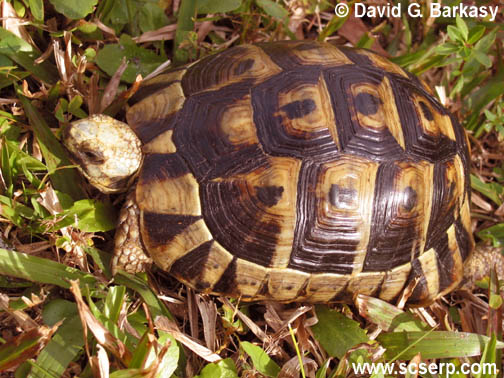
| Wildlife Before heavy agriculture started, Iran had much more wildlife than it does now. It still has some. The mammals included hyenas, Alborz red sheep, possibly tigers, oreal rams, and fallow deer. The birds include the yellow partridge, white-throated robins, pink flamingoes, black kites, golden eagles, and red wattled lapwings. There are reptiles such as agama lizards, and greek tortoises. Iran has some venomous snakes. Iran once had lions, but they are now extirpated. Tigers are thought to have been extirpated in Iran but there have been some recent probable tiger sigtings. There are probably about 150 species of salt water fish around Iran. There also some shellfish, shrimp, and lobsters. |
| by Noah Arthur |
 |
 |
 |
 |
 |
 |
| Country of the Month |
| by Noah Arthur |
 |
 |
 |
 |
 |
 |
 |
 |
 |
| by Noah Arthur |
 |
| Diet The two main foods in Iranian cooking are rice and unleavened bread. The bread is similar to tortillas. Also they eat chickpeas, soups including barley soup, cucumber, yogurt, onions, Persian melons, water-melons, pistachio nuts, and kebab meats. The national dish is the "chelo kebab". It is rice with a meat kebab on top of it. The main meat used in kebabs is lamb. A very special and strange dish is yogurt soup. Desserts include halva, a seed and honey candy, and baklava, a DELICIOUS flaky honey-nut pastry. Baklava is the best sweet food I have ever had. Tea is the main drink. Instead of sugaring tea, a sugar cube is held between the teeth and allowed to dissolve as the tea is drunk. Non-modernized Iranian families eat sitting on a rug. Bijan Restaurant I ate at a good Persian restaurant. I had the unleavened bread and they served a feta cheese cube with it. I cut slices of feta and put them on bites of bread. We had pomegranate chicken, a creamy white dip goop called hummus, ground up foods wrapped in grape leaves called dolmah, chopped and stewed eggplant, and kebabs. I liked everything except the eggplant, but my mom liked it. After our meal we had a dessert dish of pistachio ice cream flavored with rose water and the best baklava I have ever had. I would eat there again. Lifestyle Urban housing is usually a few houses positioned around a yard that usually contains a pool. Near the Caspian Sea, non-urban houses are two-stories high. Elsewhere, non-urban houses are only one-stroy high because of the danger of earthquakes. Nomads mainly live in portable goat hair tents. Women usually marry in their late teens. Men usually marry in their twenties. There is a dinner party before and after the wedding. Both families of the couple participate in eating and money talk during the first party, and other conver-sations in the second one. During the wedding and Islamic religious leader usually reads form the Qu'ran. He asks the woman three times if she will marry the man. The first two times she says "No!" But on the third she says "Yes". Later that day or the next, there is the second dinner party. Then the couple leave on their honeymoon. Women have to swim in different parts of the beach and ski on different parts of the mountain than men. Women are generally not considered as important as men in Iran. They are usually separated from men when they leave the house. Girls aren't allowed to be taught in the same schools as boys. Women have to wear a chador whenever they go out. Some Iranians are trying to change all this. Women can now get equal schooling and jobs as men and they can have their own cars. Until the 1940's only boys were schooled and the Qu'ran was the only subject. Now, schooling in Iran is very similar to the US. Arabic is taught for seven years. A major exam must be passed to get into high school and another to get into college. |
 |
| Early History Iran is one of the world's oldest countries. Over its history, which extends from 6000BC until now, it has had an empire, been part of foreign empires, and been a monarchy. From 1979 on, it has been an Islamic Republic. In 3000BC the Elamites, who lived in cities and had an organized religious system were in Iran. They were ruled by a king. People called the Aryans (where the word "Iran" comes from) began coming from the north into Iran in 1500BC. Where they were at the time was called "Parsa", and the people that lived there were called Persians. They were under the Archaemenid dynasty which controlled most of the Middle East including Egypt. Cyrus, Darius, and Xerxes Cyrus the Great ruled. He conquered Babylon, a very well fortified and protected city. He was a good ruler and allowed thousands of Jews to return to Jerusalem from they captivity in Babylon. Darius then took the Archaemenid throne. He put down uprisings and divided the empire into 127 provinces, each lead by a secretary, a governor, and a general. Darius did many things to make sure that the leaders were honest and hard-working. Darius also built the world's first highway. Darius had post stations along the roads. He also had messangers and soldiers along the roads. Darius built Persepolis, a city with sewage systems and running water. Darius went to Persepolis annually to do religious rituals about his god, Ahura Mazda. His religion was called Zoroastrianism. It was Ahura Mazda fighting an evil spirit. People from his empire brought him gifts there. The gifts included giraffes and gold dinnerware. Revolts began in Greece and Egypt. Darius was going to put them down but he died. Darius' son, Xerxes, tried to fight the Greeks but lost. He got to Greece by crossing a strait by building a bridge made of ships only to be defeated on the other side. Foreign Rulers The army went home only to find Alexander the Great was coming against their empire. He won several great victories over the Archaemenid dynasty and raided Persepolis. Everything was lost. Alexander took all of Persepolis' books and treasures. He finally burned most of the city and made himself king. After that, he was very nice to the Persians and let them have complete equality with his own Greek and Macedonian people. Alexander died, and three of his generals fought for the land. Finally, they divide the big empire between them. Iran was conquered by Seleucus. He started a dynasty that stood for 100 years and did trade in foodstuffs and other things. The the Parthians took over. They lasted from 87BC and ruled until 224AD. In that time, they fought and defeated the Roman Empire in many places and traded with China. China sold apricots and silk while the Parthians sold veggies. Then the Sassanians took over. Their first king was Ardashir, a man who, before he was king, fell in love with the Parthian king's wife, and they ran away and got married. Then he lead a successful revolt against the Parthians and he became king. He was a good fighter, making Iran a much bigger country. His son, Shapur I, was his successor. Shapur was an even better fighter, and he captured the Roman Emperor, Valerian. He had many books translated into his own language. The next king, Chosroes I was very good to the people, setting up orphanages, helping farmers and students, and allowing religious freedom. But his nobles spent all their time on themselves so the opposite effect of the king's wants was gained, and the people became poorer. Over the next six years, seven different kings ruled at different times and the empire became weaker. Islam Then the Arabs took over. They brought Islam to Iran. The Arabs gradually became more and more Persian. They had a Persian mail system, dress, table habits, and money. They still had Islam belonging mostly to the Shiite branch. The Arabs began to weaken and the Persians began setting up their own small kingdoms inside the Arabian kingdom in the 10th century. Then the Turks took over. They came from Central Asia and didn't care much about the government in Iran, and they allowed the Persians to have theirown government. Then in the 13th century, the Mongols took over. They invaded, lead by Genghis Khan, in 1220's AD. Then they invaded again in 1256AD, lead by Hulagu Khan. In both invations, Iran was almost completely ruined. Everything was lost in both. Many men were killed. Another Mongol invation came, lead by Tamerlane (Kublai Khan). He ruined a city killing 70,000 residents. After that he encouraged Persian arts and allowed some freedom. Then the Safavids (Persians) took over. The first Safavid king was Ismail. The most powerful was Shah Abbas. The Safavids made Shiite Islam the official religion. Shah Abbas built a mosque for his father-in-law and a bigger one for himself. He made a mosque-bordered sandy area in the middle of the capital city. Nadir Shah took over the throne. He invaded Afghanistan and India in 1738AD taking everything he could from those countries. He was a cruel king who blinded his own son and was known as the Persian Napeolean. He was assassinated by his own bodyguards. Industrial Revolution Then the Qajars invaded Iran. Rich, young men went to college in Europe and brought back news of the Industrial Revolution. Both Russia and Great Britain wanted Iran. Russia took over two of Iran's provinces in two wars. Iran need money so they traded with Russia and Great Britain. Russia and Great Britain started their own separate bank systems in Iran, and the economy went down. There was so much unrest that the king made an elected lawmaking group. Iran was divided between its old ways and the Industrial Revolution. Then Iranians discovered oil. An oil company formed. The Anglo-Persian Oil Company was soon Iran's biggest industry. Pahlavi Dynasty World War I came. Iran was neutral but supported Germany some. After the war ended, a bad famine hit Iran. Corrupt government people and rich people sold food at huge prices. Many people starved to death because they didnt't have money to but the greatly overpriced food. After the famine, the current Iranian ruler went on a two-year-long vacation in France. While he was gone, Reza Khan and the Pahlavi dynasty took over Iran. Reza Khan modernized Iran. He built railroads, banks, Iran's first univeristy, and introduced cement, sugar, and other modern things. Muslim religious leaders lost huge amounts of land. Muslim customs were changed: men wore pants and suits instead of traditional clothing, and women didn't have to wear the chador, a veil that covered them completely. The custom of marrying young changed. World War II started. Iran held exactly the same position that it had in World War I. Russian and British armies soon were in Iran. Reza Khan gave up the throne. Soon the war ended and around the same time, Mohammad Reza took the throne. He was Reza Khan's oldest son and was known as the Shah of Iran. He had to deal with the United States, Russia, and Britain. They left Iran six months after the war stopped, but Russia didn't leave. It tried to make Iran give it oil. The United States made Russia leave. A man named Muhammad Mussadiq, began speaking publicly against the Anglo-Persian Oil Company. Everyone supported him. In 1951, the oil industrial was nationalized (it became oily Iranian, the "Anglo" was taken out of the name. Iran kept all of the oil profits. Iran didn't have enough workers to keep the oil industry going. Many people lost their jobs. The economy went down. There was a civil war over oil! The Shah left but with U.S. support he returned. After the war, the Shah began modernization. He planted trees, helped the poor, built schools and health care centers, and gave women rights. Industry went up and agriculture went down. There began to be more and more unrest and unhappiness in the people. The Shah had a secret police service that captured anyone who spoke against him. The Shah didn't allow any politcal parties except his own to be in the country. Finally, there was so much unrest that the Shah left the country. The Islamic Revolution In 1979, Ayatollah Khomeini returned from France and ruled. The new government under Ayatollah Khomeini was an Islamic Republic, anti-American, and not agreeing with modernization. Khomeini was the Supreme Leader. People who'd before supported modernization, (doctors, engineers, teachers, etc.), left the country, and many others were put to death. A large group of Iranian students attacked the U.S. embassy, taking many hostages. The U.S. tried to get the captives back but lost some soldiers in a helicopter crash and gave up. The captives got their freedom back in 1981 after 444 days in captivity. The Iran-Iraq war began, mainly fighting for areas where there was oil. Iran was also trying to force their theocratic government on Iraq. There was much loss of people and materiel. Five million people lost everything and were made homeless. Three-hundred thousand Iranians died. Then Ayatollah Khomeini died. His funeral was the largest ever. Khomeini's huge coffin could barely get through the crowds to the cemetary. After Khomeini, Ali Akbar Hashemi Rafsandjani became President, and Ayatollah Khameini became Supreme Leader. Rafsandjani was unsuccessful fighting inflation of prices. After him came Seyed Mohammad Khatami. Khatami was voted for by 70% of the people. He tried to make Iran a better place to live but with little success. Islamic religious leaders punished any act against Islamic law. Now it is still a fight between stubborn religious leaders who control Iran and people who want freedom. People from the age of fifteen and up can vote. Iran has a three branch government. Their choosing of a president is like the U.S. The president is in power for four years and if re-elected for eight. The governmental branch called the "legislative" branch is made up of the Majlis, or Islamic Parliament. It make laws. It has 290 members. The judicial branch of government is made up of the supreme court and other courts. In Iranian trials, the judge is not just judge, but jury and just about everything else!. The Supreme Leader's Council chooses all candidates for all elections and all judges. The Iranian government is not a free government because the Supreme Leader and his council control everything. Islamic law is the base of all Iranian law. The Supreme Leader, also called the velayat-e-faquih, or Islamic jurist, is the most important political person in Iran. He can say no to any decision made by the president or the Majlis. He controls the army, police, and all of the government. He could be called the Dictator or Totalitarian Leader or the Tyrant of Iran. The President is like his puppet. When people in Iran are drafted into the army, they can either serve in the army for two years, or pay a fee. The police force is called the Revolutionary Guards. Another similar group, the Viigilantes, are probably paid for by religious leaders. The vigilantes do bad things such as raiding colleges and stealing computers. Islam requires all of its women believers to wear the chador. It is a black cloth that covers everthing except the face. Men wear baggy clothing mainly in gray, white, and black. Turkoman men wear huge black sheepskin hats. Turkoman women wear reddish robes. Islamic religious leaders wear black robes. Kurdish women wear robes with bright pheasant-like patterns on them. These robes are usually red in overall color. Most Iranian men wear turbans of white or black. |
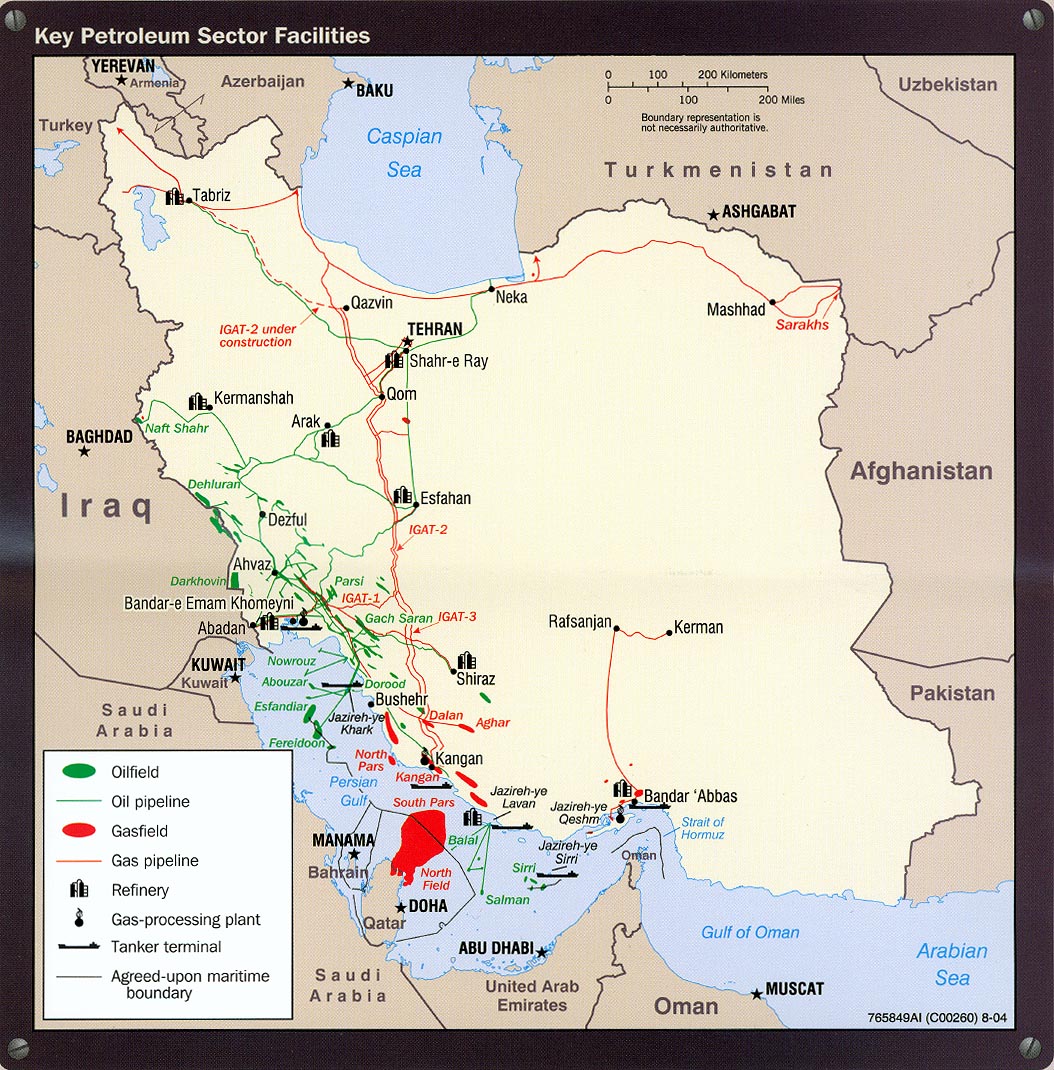
| map |
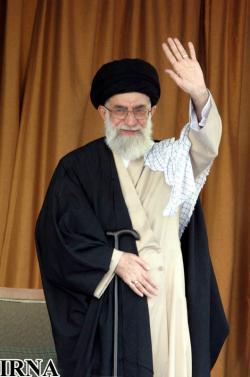
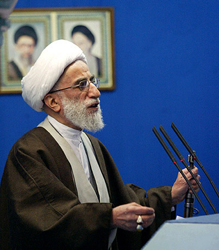
| ayatollah khameni |
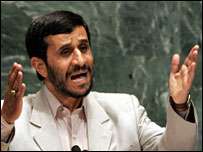
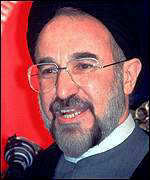
| Ahmedinejad |
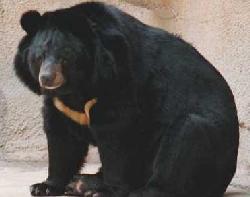
| Asian black bear |
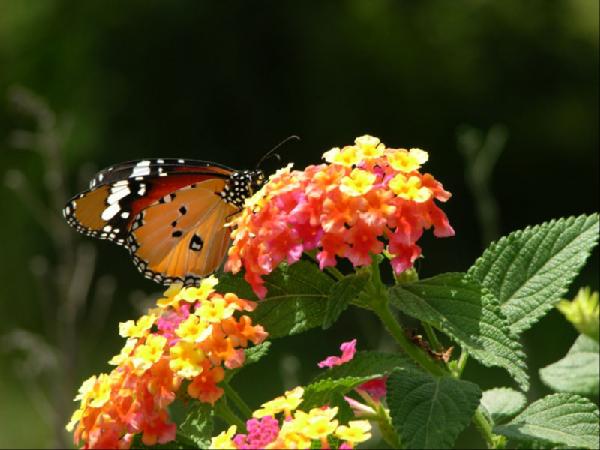
| plain tiger |
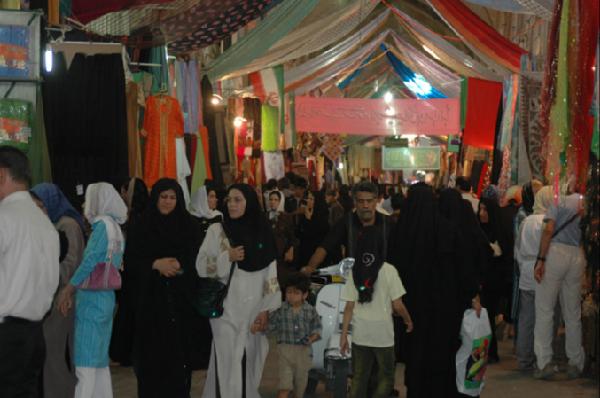
| bazzar |
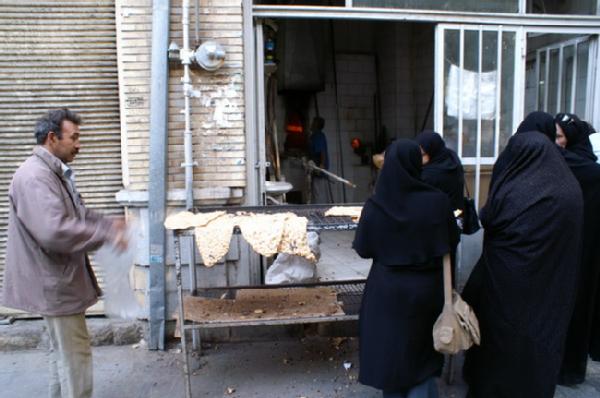
| breadseller |
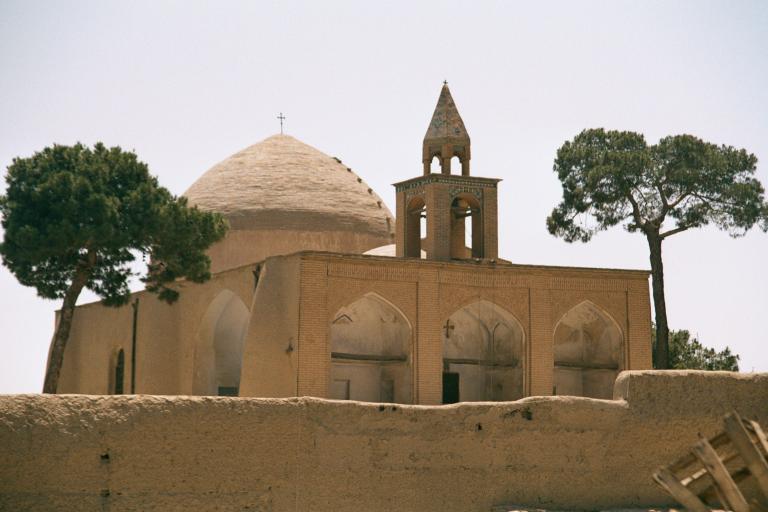
| Christian church |
| mosque |
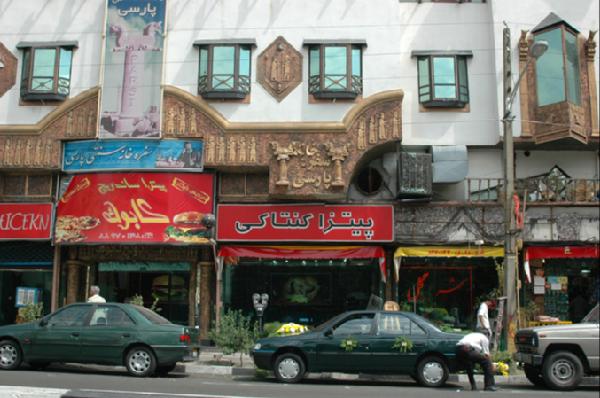
| tehran street |
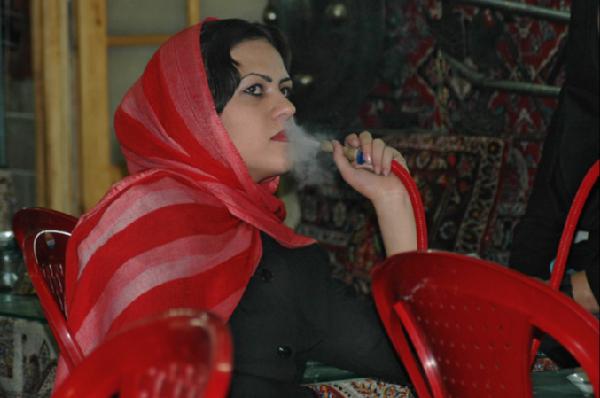
| woman smoking |
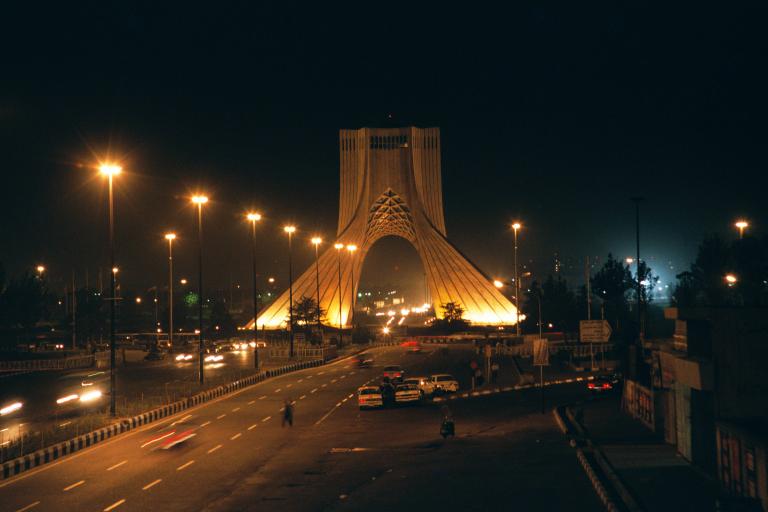
| tehran |
| greek tortoise |